Journal · Aromatherapy
How to dilute essential oils safely: rates for every use
By Giang Tara · Updated Nov 2026

The most common mistake I see in new users is putting essential oils straight onto the skin. Oils are highly concentrated, and using them undiluted can cause irritation, redness and even long-term skin sensitivity. Diluting properly is the simplest step towards using oils safely.
What is a carrier oil?
A carrier oil is a plant oil that carries essential oils onto the skin. Familiar options include jojoba (light, suits most skin), sweet almond (soft, good for massage) and fractionated coconut (thin, non-greasy). Avoid almond oil if you have nut allergies.
Dilution rates by use
These ranges follow guidance from the Tisserand Institute, one of the most respected references on essential oil safety.
| Use | Rate | Approx. drops in 10 ml carrier |
|---|---|---|
| Sensitive or damaged skin | 0.2–1% | under 1 to 2 drops |
| Face and sensitive areas | 0.5–1.2% | 1–2 drops |
| Body oils and body massage | 1–3% | 2–6 drops |
| Bath products | 2–4% | 4–8 drops |
Drop counts are only estimates, as drop size varies with the bottle and the oil's thickness. A common rule of thumb is about 20 drops per 1 ml of essential oil, so 1% in 10 ml of carrier is roughly 2 drops. When unsure, choose the lower rate.
For young children, older adults, pregnancy or anyone under medical treatment, ask a doctor or qualified aromatherapist first.
Patch testing
- Mix the blend at the rate you plan to use.
- Apply a little to the inside of your forearm.
- Wait 24 hours. If you notice redness, itching or burning, wipe with carrier oil, wash with soap and don't use that blend again.
Oils to keep out of the sun
Some cold-pressed citrus oils such as bergamot, lemon and lime can cause skin reactions in sunlight. The National Association for Holistic Aromatherapy (NAHA) advises avoiding sun and tanning beds for at least 24 hours after applying them to the skin.
What not to do
- Don't swallow oils or put them in eyes, ears or nose.
- Don't dilute in water; essential oils don't dissolve in it.
- Don't increase the dose because you "can't feel it yet". More is not better.
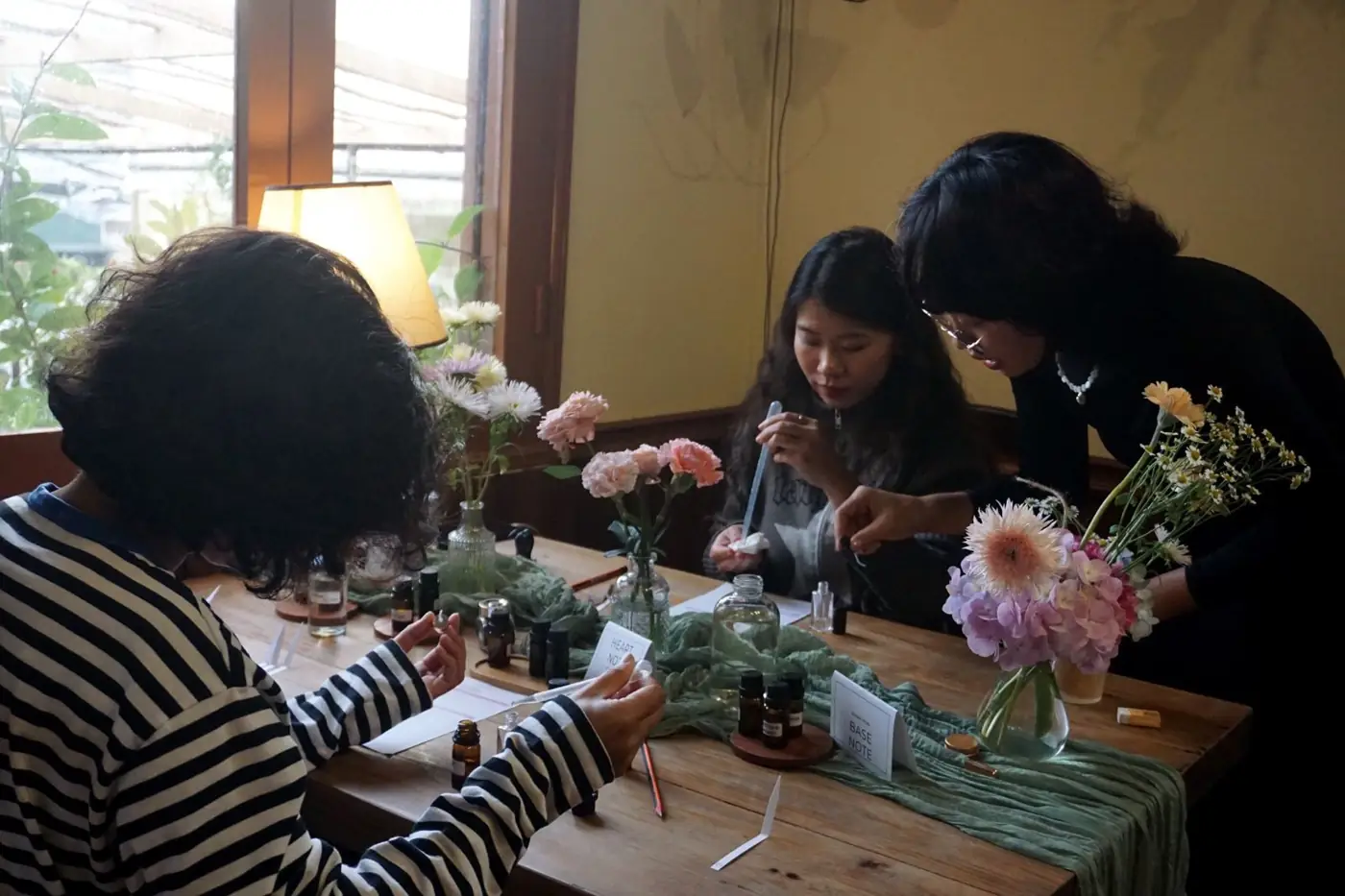
In Aromatherapy Foundations you'll practise blending with a kit shipped to your home, guided step by step by Giang.
Read next
 Aromatherapy
Essential oils for sleep: 5 ways to use them well
Oils often used before bed, how to use them well, and a 10-minute evening ritual with scent and breath.
 Aromatherapy
Essential oils for beginners: what to choose and how to use them
The first five essential oils to own, how to recognise quality, and three simple, safe ways to use them at home.
 Aromatherapy
What are chakras? The seven chakras through breath and essential oils
An introduction to the seven chakras of the yoga tradition, their symbolic themes and a practice with breath and essential oils.